
Shell Energy Website
* Please be aware this page is not linked on the main home page
Tasks
UX, UI, Research, Web design, Stakeholder management
Team
Product Designer, Researcher, Product Manager, Software engineers x2
Time
Aug 2022 – May 2023
At a time when energy prices are very high and rising, customers also have a great desire to reduce both bill costs and their environmental impact, and they want guidance on how to to do this. As part of Shell’s target to Net Zero, they need to get users to consume energy in a more efficient way.
The end product is a consumer facing web platform that provides consumers with information to understand cleaner & more efficient energy for their homes.
The challenge
There is alot of anxieties around energy bills due to the current climate. Customers are keen to reduce their energy usage, but want more guidance around the impact of their habits. Customers are also interested in technologies that can help them reach their goals, however new technologies such as Solar Panels can be daunting, especially with such large upfront costs.
The goal
Our goal was to create an information web platform that provides consumers with information and acts as a gateway for users to purchase clean energy products from Shell’s portfolio.
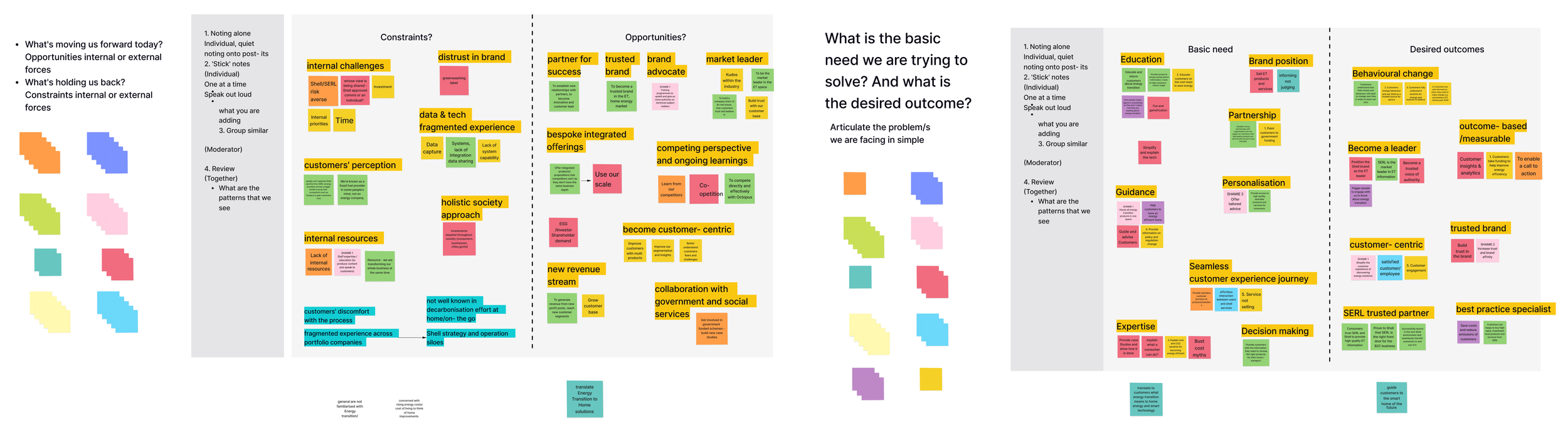
Kick off workshop

We started the project by planning and conducting a kick-off workshop with all stakeholders involved. This allowed us to be aligned with the problem we’re solving and the goals we want to reach.
This also allowed different stakeholders to share information on their area of expertise
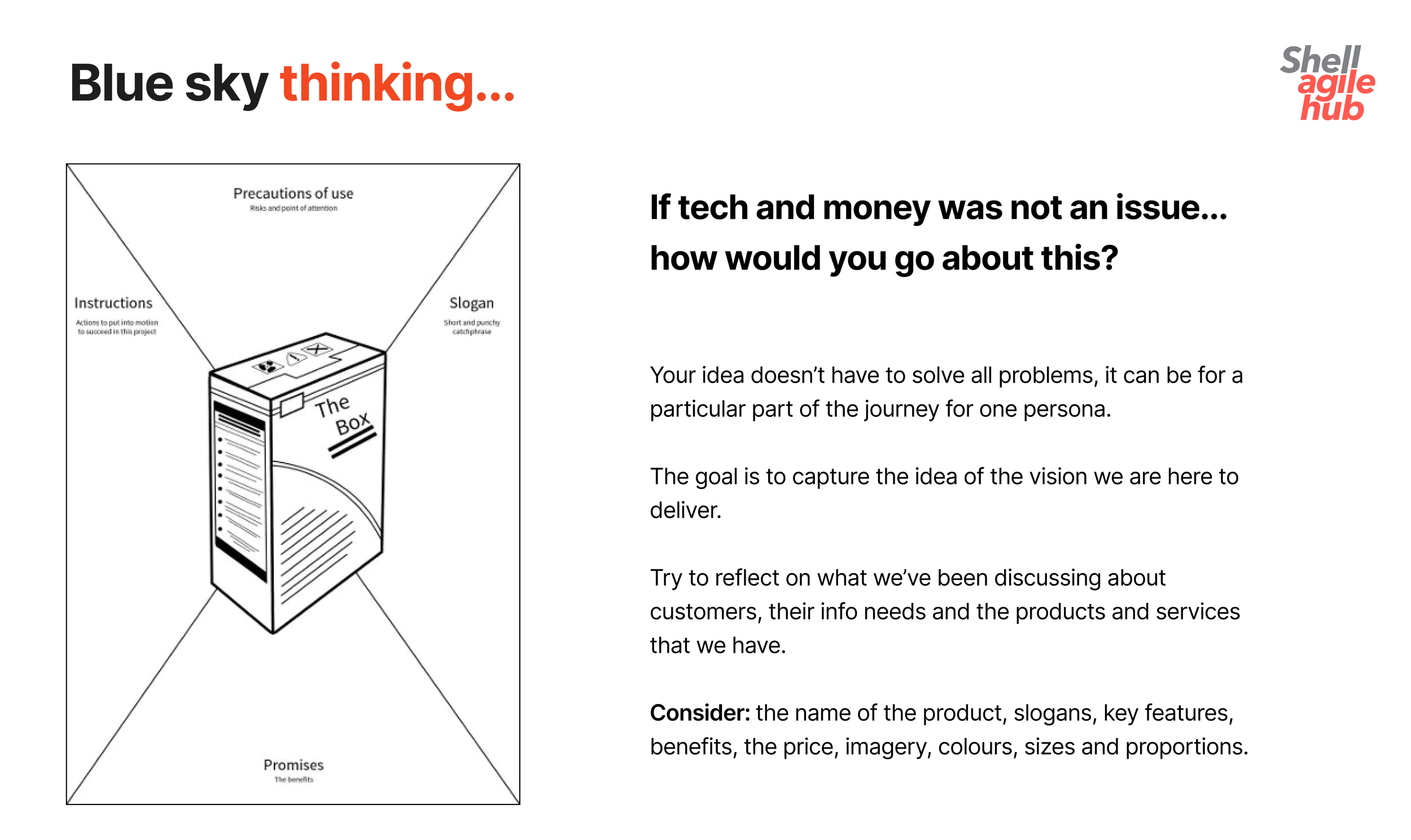
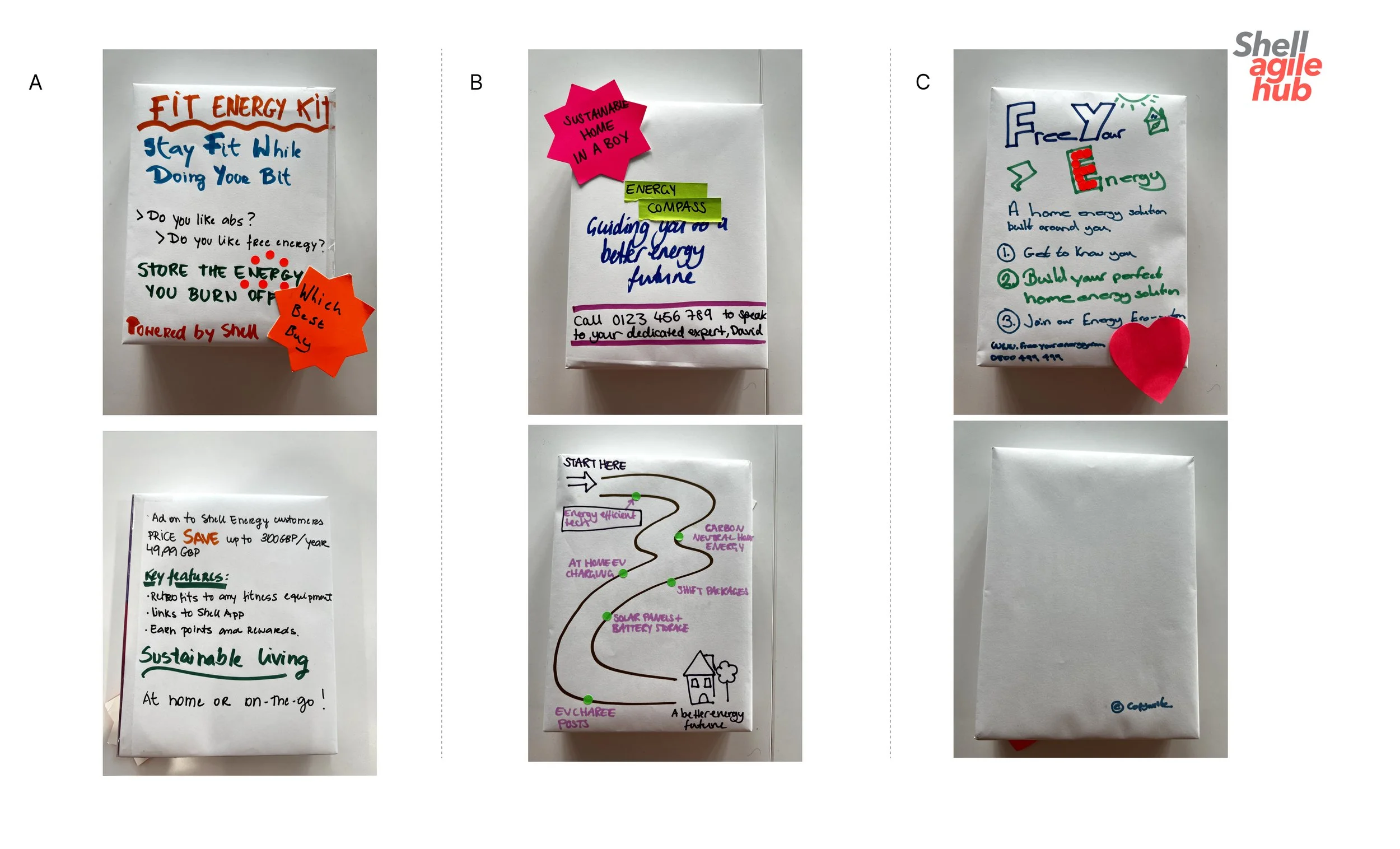
Blue sky ideation task to allow for ‘out of the box’ ideas
Personas
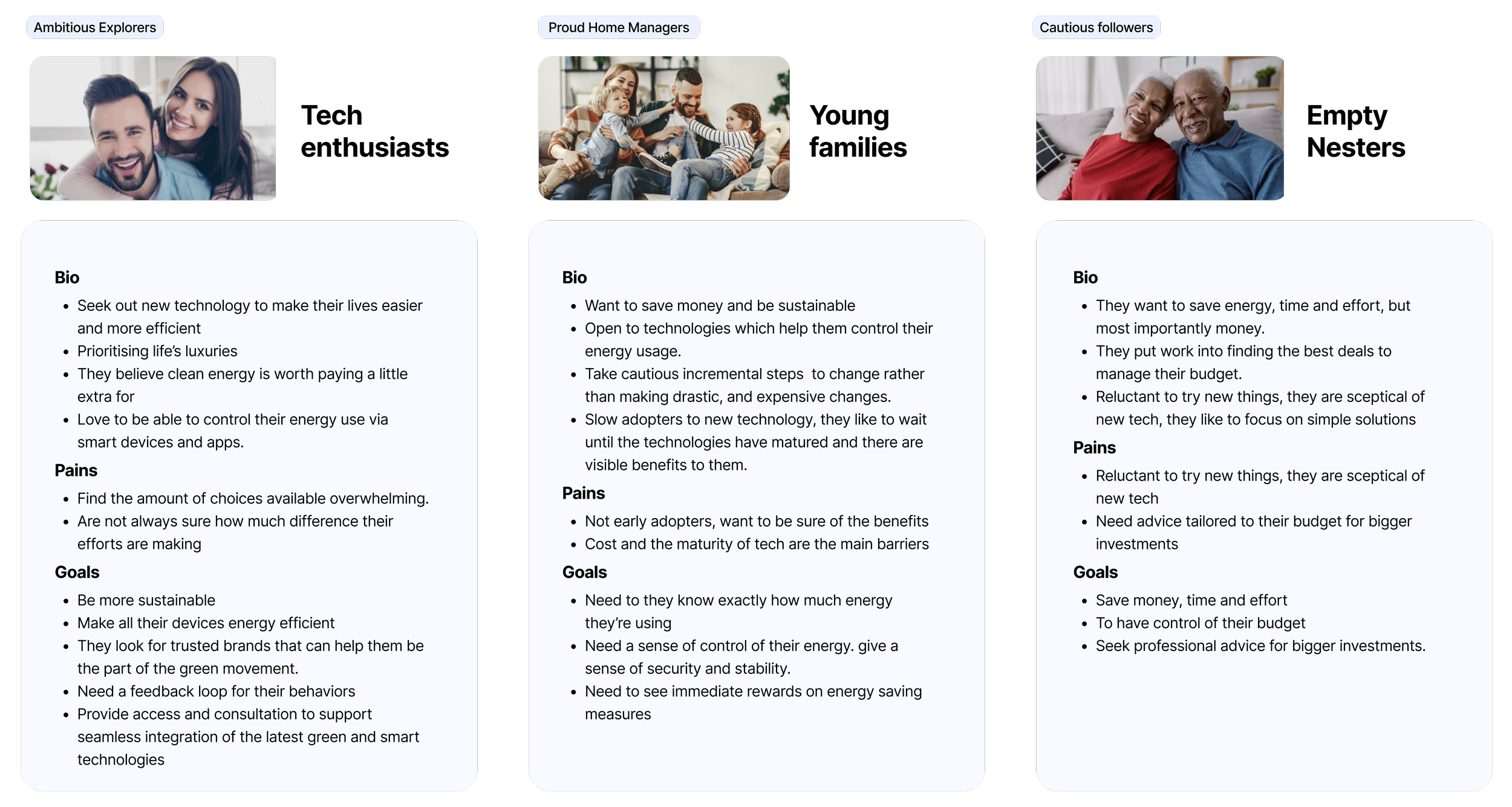
Using marketing segments as a starting point for user recruitment, we conducted thorough research to have a clear understanding of our personas and their energy management goals.
Information seeking journey
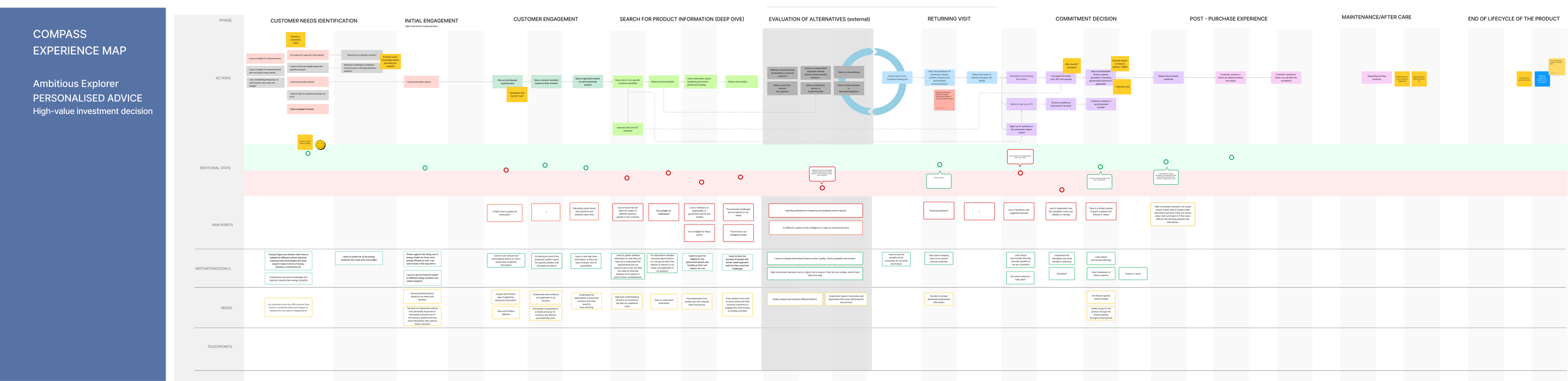
Information seeking journeyThe information seeking journey is the process in which users seek out relevant information and the type of information they require in order to convert and make a purchase. Each persona type had a distinct way of researching, which varied from.
We created an experience map for each persona. MApping out the journey from awareness and consideration, to conversion and retention.
Problem framing workshop
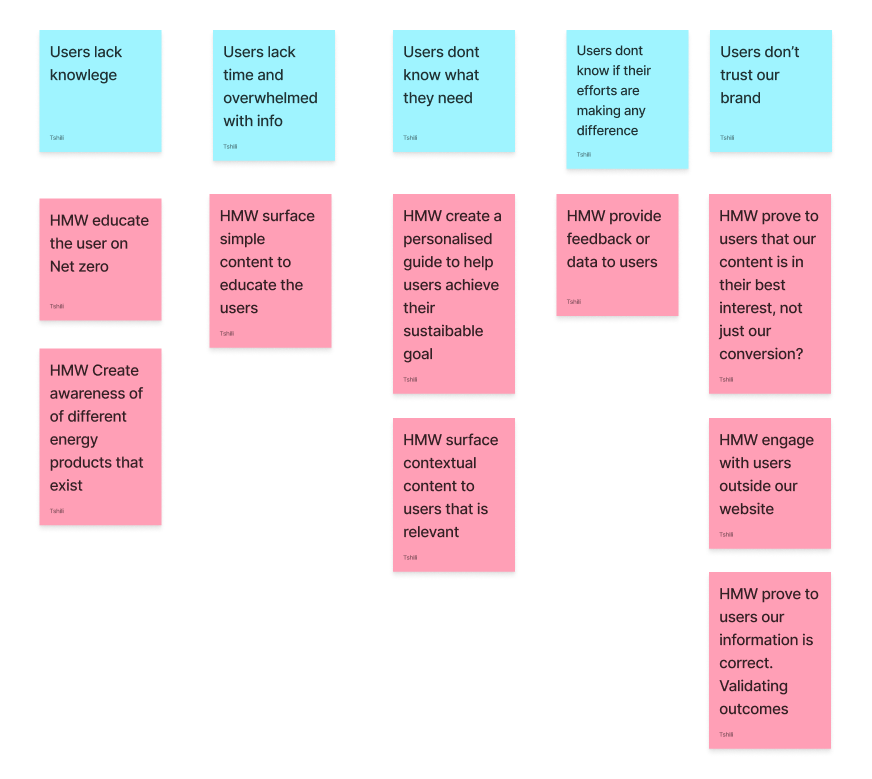
Using the qualitative research we conducted a problem framing workshop with stakeholders, to help define and narrow down the problem statements we will be solving for.
This resulted in clear problem statements to design for, along with HMW statements.
Design concept
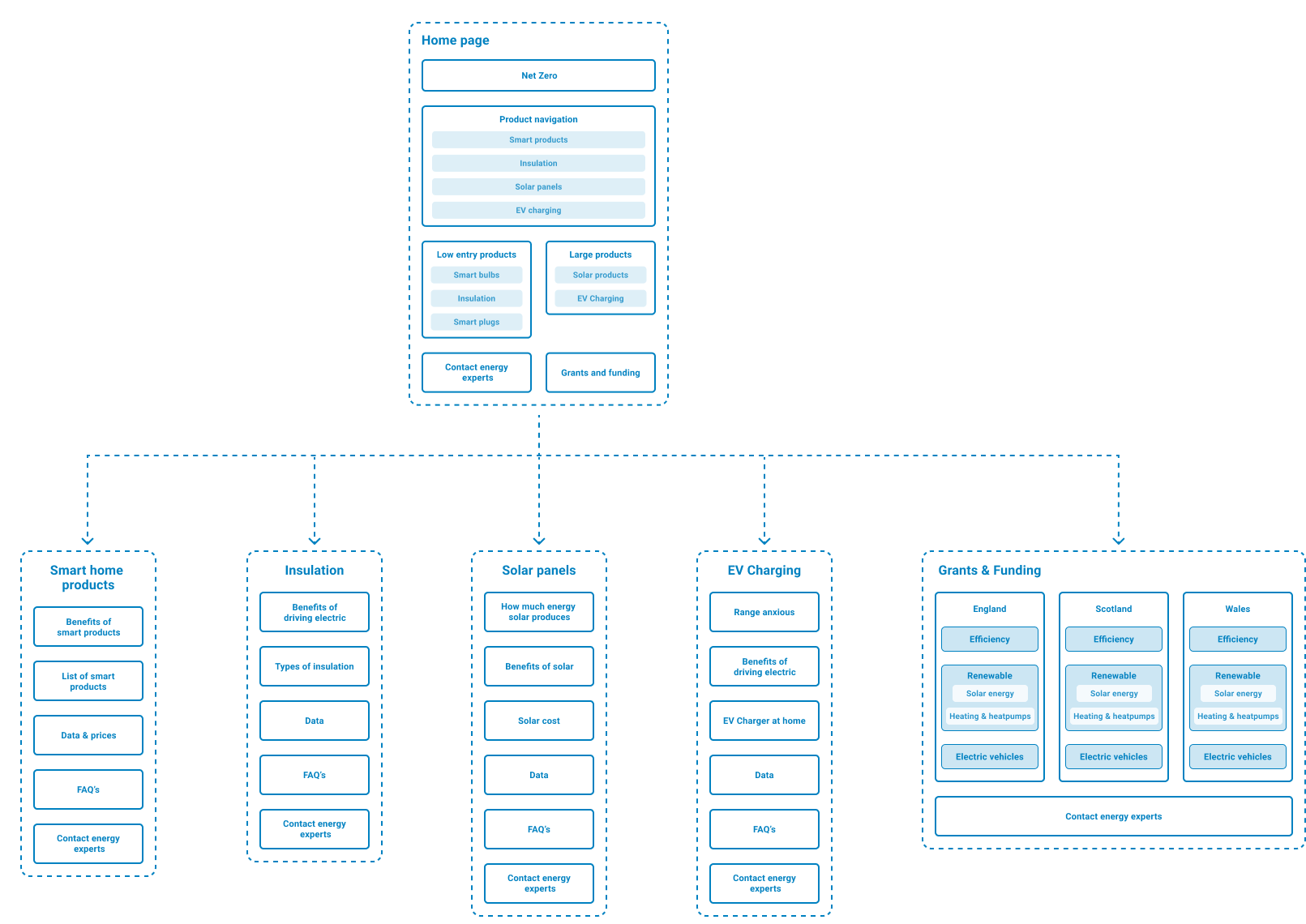
To create a home landing page that progressively loaded information in a simplified way, and introduce the concept of Net zero without overwhelming users. There would also be an introduction to small ways users can upgrade their home with technology. The final CTA would be to contact the Clean Energy experts, who are agents
Each product page would outline the benefits of the product, alog with costs and interesting data about the product. There would also be an FAQ section which would surface information that users commonly seek for each product.
User testing
We created low fidelity designs and conducted qualitative user tests with different persona types, to validate the concept and the information we were providing. We itterated designs based on feedback. The main feedback was for us to insure we has adequate information around price and data, as this is what users found most helpful.
Final designs
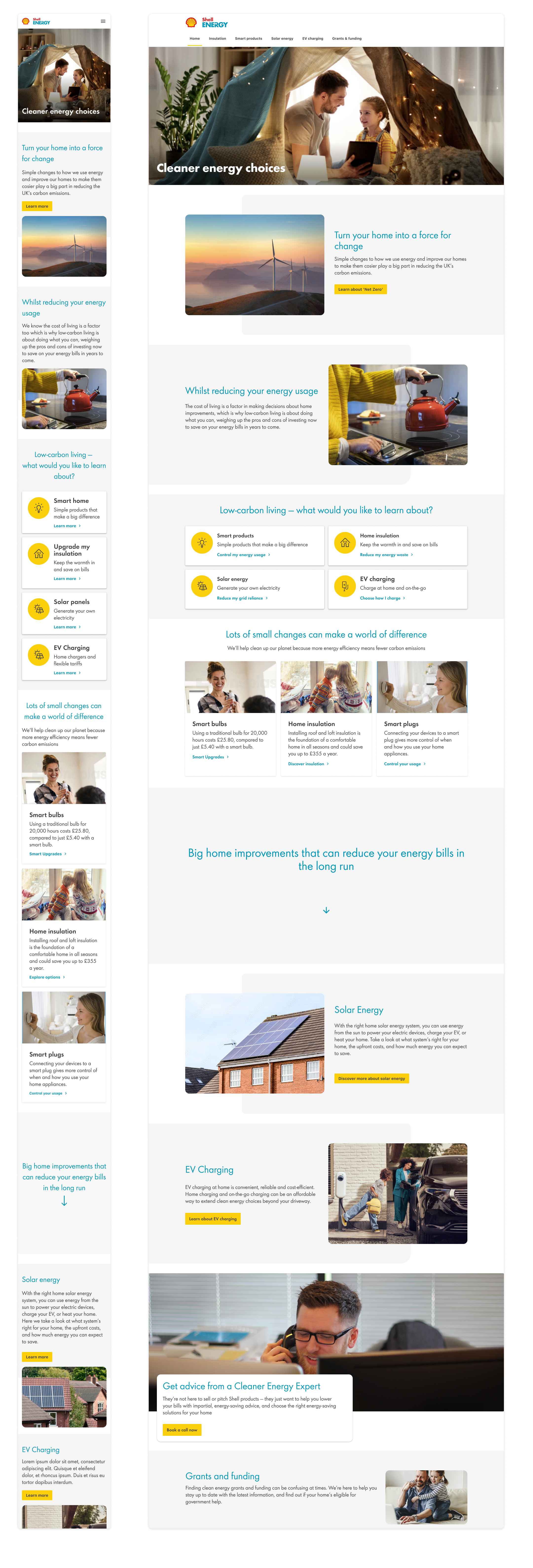
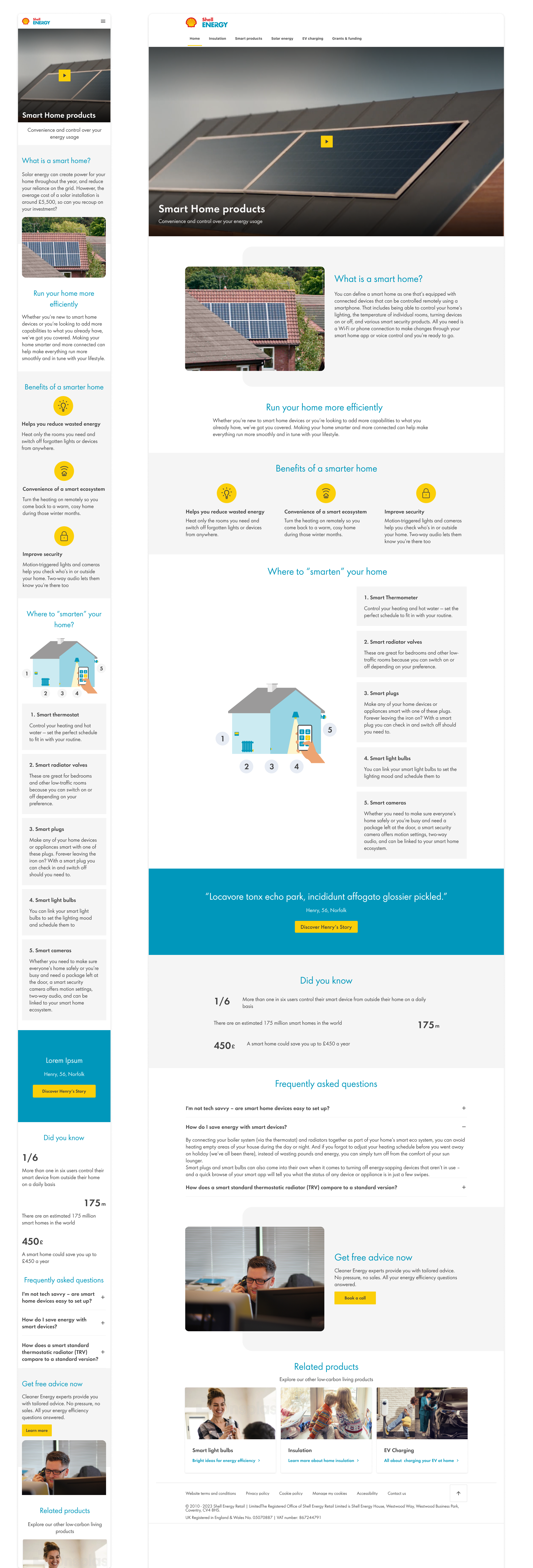
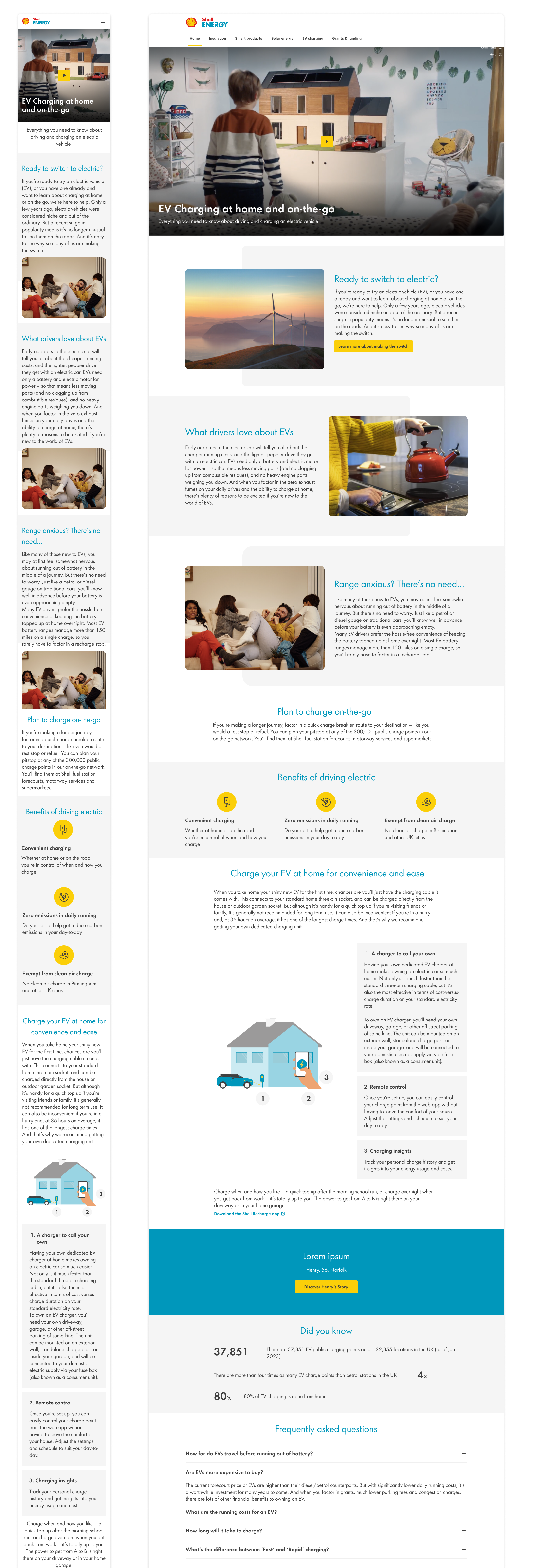
A fully responsive web platform using Shell Energy’s design system and creating new components. After multiple rounds of user testing and feedback we launched the new information hub to a controlled number of users to test it externally. This was slowly rolled out as part of a larger campaign.
Please be aware this page is not linked on the main home page