Deliveroo New Riders
Tasks
Research, UX, UI, User retention
The Rider Life Cycle team owned every touchpoint in a rider's journey with Deliveroo, from onboarding through to the information they needed to do their job day to day.
First Delivery Problem
In the Singapore market 35% of new riders are not activating. Activation is defined as completing the first 10 orders. The biggest drop off happens after the first shift is booked, where many new riders not turning up to their first session. New riders feel unprepared to begin riding due to all the unknowns and they are also concerned about what the order experience looks like.
Business opportunity
Increase new rider activation, as the business spends a lot of money in acquiring new riders and providing uniforms.
To provide sufficient information that prepares new riders for working and reduces first shift anxieties.
There is a bigger goal to signing up all remote, and reduce in person onboarding. As this will remove riders' main source of information, new rider education needs to work remotely.
Research
“The booking tool is easy to understand. Where do I go to work? What will an order look like?”
We spoke to people who had recently signed up to work, learned that these are the most important questions we need to solve for:
Where do I go to work? New riders don’t understand where to go to receive orders.
I cannot visualise an order - what will it look like?- Riders are anxious about what they are expected to do to successfully complete and order through the app.
What do I do when something goes wrong on an order?
In order to feel prepared and reduce anxiety, applicants source further information from their rider friends, this may not be available to everyone.
We started by auditing the current educational videos in the onboarding process to understand why new riders still felt unprepared. We realised that riders are shown this information too early in the process, before they complete the application forms. At that point they need information regarding pay and working hours. And it was also difficult to access after this point so riders are not able to refer back to them when they are ready to work.
Activation flow
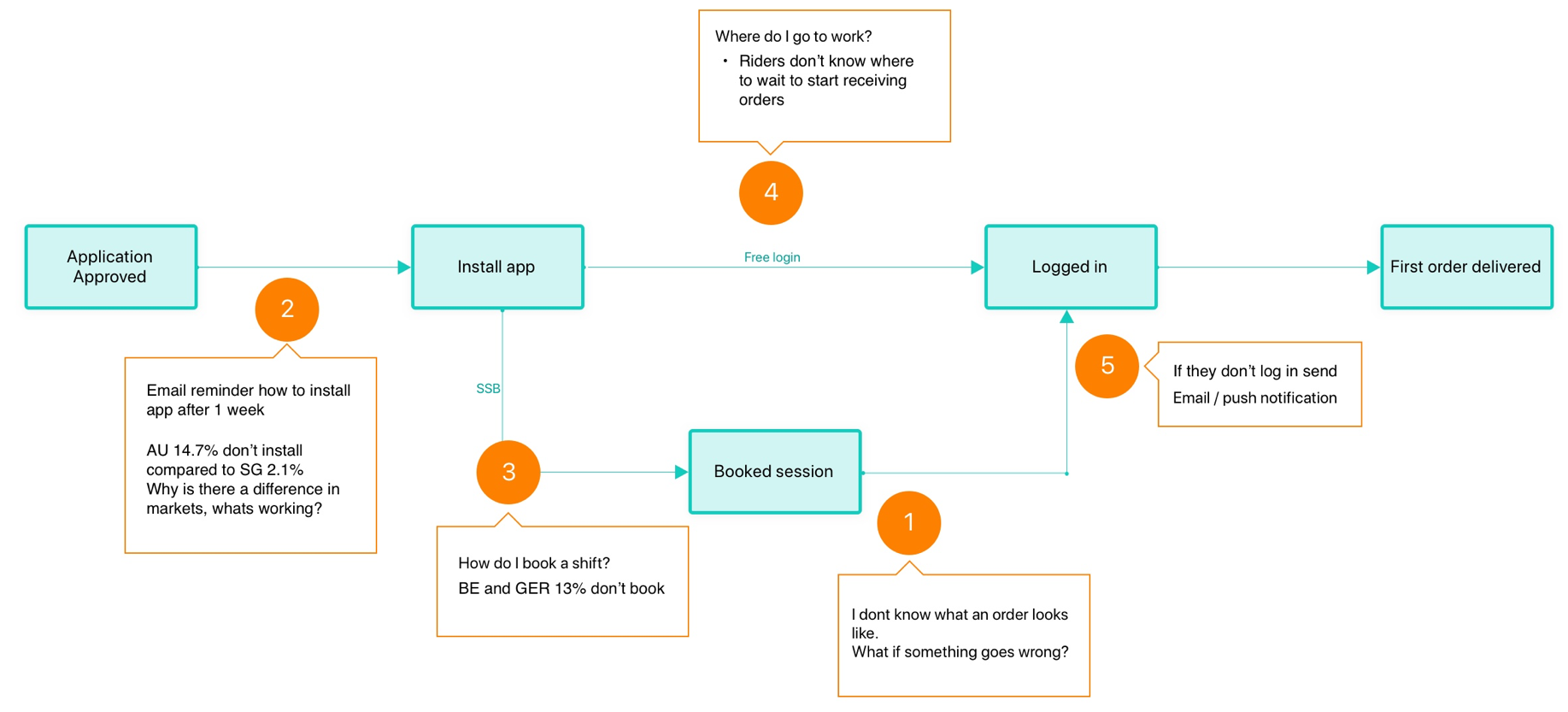
The flow shows the journey from the application being approved to the first order being completed. The numbered points show in order where we experience the biggest drop off according to the data. The highest drop occurs after riders have booked a session, they become anxious about what the delivery experience will actually be like. This contrasts our original assumptions regarding the usability of the app. This is more of an emotional problem.
Solution
A targeted content intervention, using email to address those specific concerns at the right moment in the onboarding journey. Users were anxious about the experience — what happens when the order comes in, how to navigate the restaurant, how to complete the first delivery.
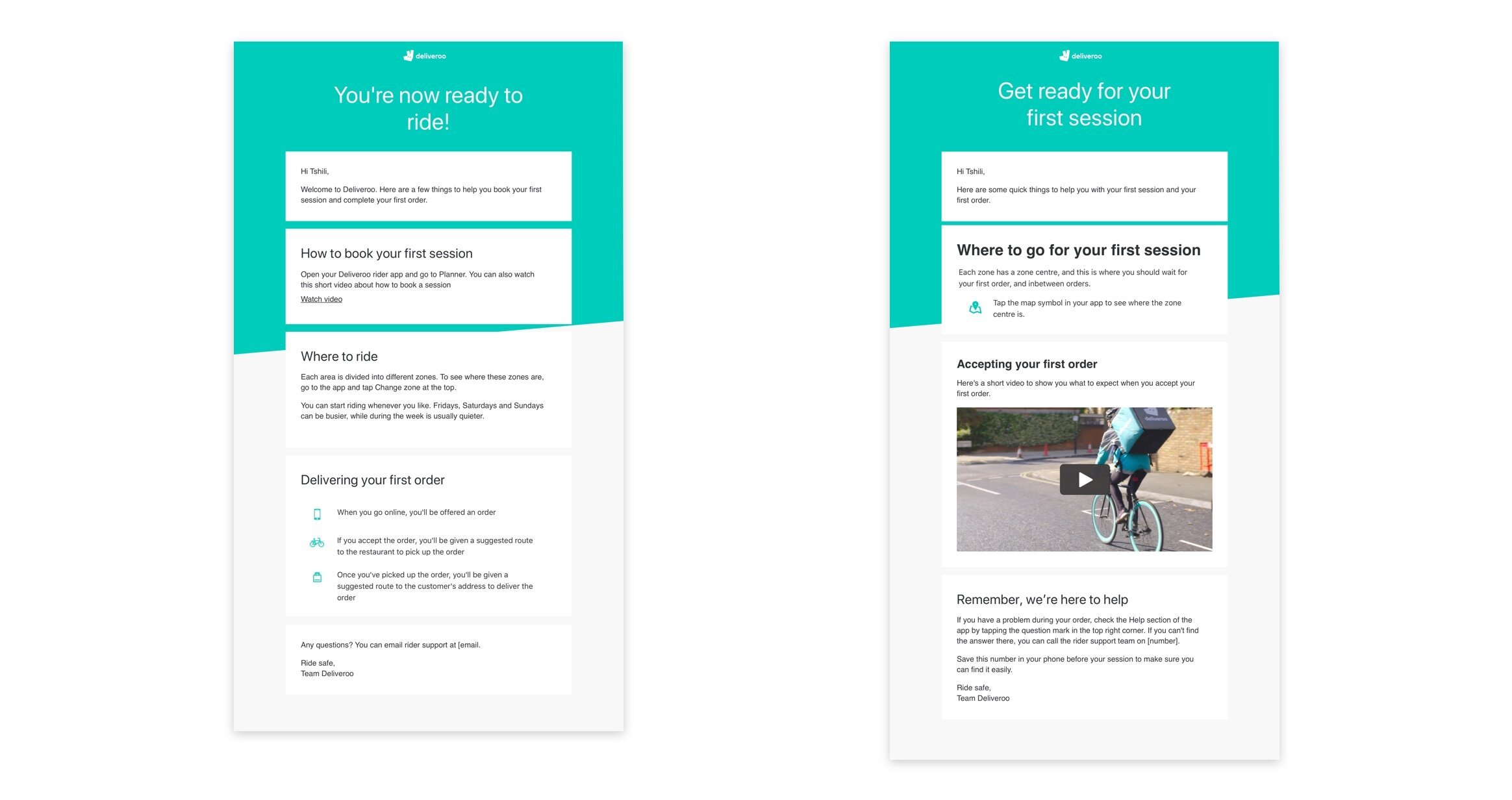
Users received a sequence of two emails, one before booking a session and after. The first email encouraged riders to book a session by outlining the high level steps of delivering an order and giving them directions of how to decide where to work.
Once they have booked a session a second email is triggered containing more detailed information about what to expect on the first session and directing them where the best place to wait for an order.
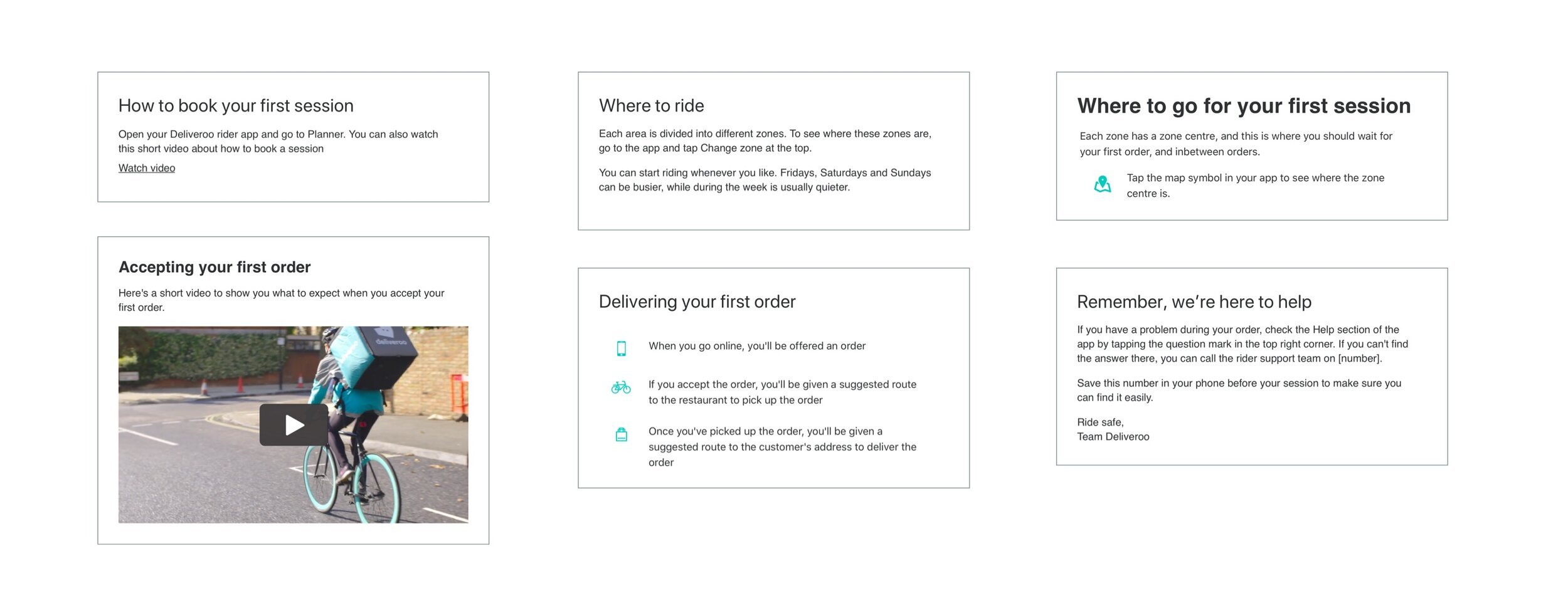
We ran a test in Singapore and the UK for 2 weeks, and we saw an increase in activation, by 18%.
We expect activation to increase over time as we have been able to identify the information the riders were lacking. We knew from rider interviews that the volume of onboarding emails were overwhelming, which was contributing to low open rates and missed information. By redesigning the email sequence to be more focused and better timed, activation started to improve. This was a successful project that allowed us to implement a solution quickly at a low cost, while waiting for the full onboarding platform to be built.
Test & results
Book your free consultation call
What we can cover on a free product strategy call:
Why your product has strong traction but low conversion
Identify the weakest Growth signal holding you back
Which features are worth building and which are burning runway
Why users aren't converting from free to paid, and what to fix first
Clarify whether you have a problem fit issue, value fit issue, or monetisation gap